10/02/2026
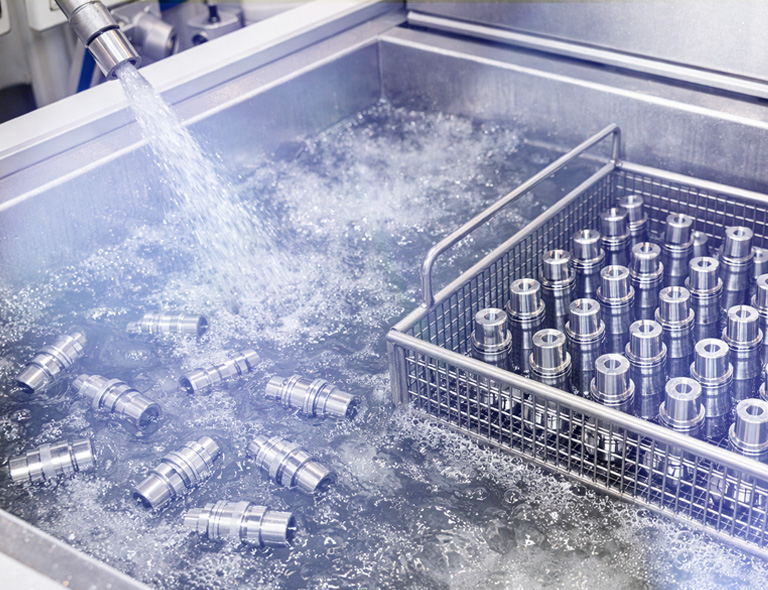
In the production cycle of precision mechanics, the washing of components is a crucial phase to ensure the quality, functionality and durability of the parts. After operations such as turning, milling or drilling, residues of chips, oils, coolants or metal particles can remain on the workpiece. This can compromise subsequent steps such as assembly, surface treatments or storage of the part.
Thorough washing is an integrated step in the production process, essential to ensure ready-to-use components that comply with industry standards.
Properly washed components:
Popular techniques include:
In addition, batch traceability ensures constant quality monitoring throughout the entire production cycle. This also makes it possible to promptly intercept any anomalies, promoting continuity in subsequent assembly or treatment processes.
This structured approach is fundamental in precision mechanics contexts, where reliability and production continuity are essential requirements.
Particular attention is also paid to the stability of the piece inside the packaging, avoiding micro-shocks or rubbing that could compromise the surfaces machined with very tight tolerances.
Proper packaging is therefore the last step in a quality-oriented process, ensuring that the performance of the component remains unchanged until final delivery.
At Guerrini Lauro, the washing and packaging of mechanical components are an integral part of the production process. The choice of the most suitable method, the use of advanced technologies and the correct management of the cleaning cycle guarantee high quality components, ready to be assembled or subjected to subsequent treatments.
Washing of mechanical components: quality assurance
In the production cycle of precision mechanics, the washing of components is a crucial phase to ensure the quality, functionality and durability of the parts. After operations such as turning, milling or drilling, residues of chips, oils, coolants or metal particles can remain on the workpiece. This can compromise subsequent steps such as assembly, surface treatments or storage of the part.
Thorough washing is an integrated step in the production process, essential to ensure ready-to-use components that comply with industry standards.
- Why washing is essential in turning
- Main washing methods for turned parts
- Benefits of an effective washing process
- Quality control and traceability of mechanical components
- Packaging: protection and storage
Why washing is essential in turning
During turning, chip, oil or lubricant residues may remain on the mechanical components. A professional wash allows these impurities to be removed, making the pieces more suitable for the subsequent stages of the production cycle.Properly washed components:
- facilitate assembly operations;
- they help to facilitate the execution of subsequent processing;
- ensure reliable performance and maximum safety in use.
Main washing methods for turned parts
The choice of cleaning method depends on the geometry of the part, the material from which it was made and the type of contaminant used.Popular techniques include:
- Immersion or spray washing with alkaline or aqueous detergents, ideal for removing surface chips, oils and greases.
- Ultrasonic cleaning, particularly suitable for components with complex geometries, blind holes or hard-to-reach surfaces.
- Chemical degreasing, used to remove persistent cooling lubricants or for sensitive materials that require specific solvents.
Benefits of an effective washing process
An integrated, well-managed wash allows you to:- guarantee ready-to-use and compliant parts;
- reduce returns, scrap and rework;
- preserve surface quality and dimensional accuracy;
- optimize production processes and internal logistics;
- increase end customer satisfaction through reliable deliveries.
Quality control and traceability of mechanical components
After washing, the components are subjected to targeted checks to verify the absence of processing residues and the maintenance of dimensional tolerances. The integration between visual and instrumental controls and documentary procedures makes it possible to guarantee the repeatability of the process and compliance with the specifications required by the customer.In addition, batch traceability ensures constant quality monitoring throughout the entire production cycle. This also makes it possible to promptly intercept any anomalies, promoting continuity in subsequent assembly or treatment processes.
This structured approach is fundamental in precision mechanics contexts, where reliability and production continuity are essential requirements.
Packaging: protection and storage
The packaging is designed according to the type of component, the material and the final destination, with the aim of preserving the conditions of cleanliness and integrity achieved. The use of suitable protective solutions reduces the risk of contamination, oxidation or damage during storage and transport. Careful management of this phase helps to deliver a compliant and ready-to-use product to the customer.Particular attention is also paid to the stability of the piece inside the packaging, avoiding micro-shocks or rubbing that could compromise the surfaces machined with very tight tolerances.
Proper packaging is therefore the last step in a quality-oriented process, ensuring that the performance of the component remains unchanged until final delivery.
At Guerrini Lauro, the washing and packaging of mechanical components are an integral part of the production process. The choice of the most suitable method, the use of advanced technologies and the correct management of the cleaning cycle guarantee high quality components, ready to be assembled or subjected to subsequent treatments.
GUERRINI LAURO S.R.L.
Via Umberto I°, 65
Calcio - Bergamo - Italy
Tel. +39 0363 969646
VAT Number 03675810166
Paid-up share capital € 12.000,00
Privacy policy | Cookie policy

Via Umberto I°, 65
Calcio - Bergamo - Italy
Tel. +39 0363 969646
VAT Number 03675810166
Paid-up share capital € 12.000,00
Privacy policy | Cookie policy
 Design by It's Web Agency Brescia