07/07/2026
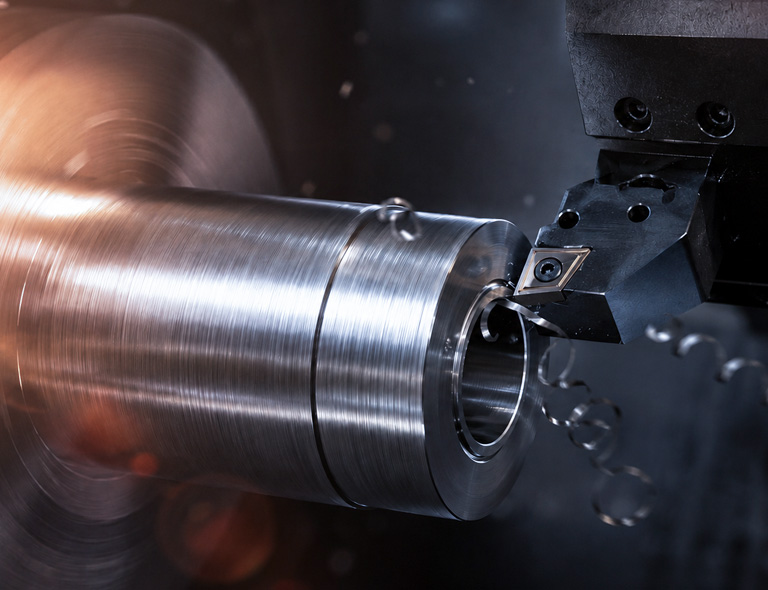
Not all steels are processed in the same way. With the same geometry and tolerances required, the choice of alloy can affect machining time, tool life, surface quality, and finished component performance. Therefore, in steel turning, knowing the characteristics of the material is the first step to obtaining reliable and repeatable results.
What are the differences between the main AISI steels? What are the properties that affect processing complexities?
Starting from the experience gained over the years, we analyze the characteristics of the main AISI steels and their behavior during turning operations.
Stainless steels contain at least 10.5% chromium, an element that guarantees the formation of the passivating layer responsible for corrosion resistance. Depending on the chemical composition and metallurgical structure, different families are distinguished, each with specific characteristics.
Austenitic steels are the most common due to their high corrosion resistance, good deformability and versatility of use. For these characteristics, they are used in numerous sectors, including the food and pharmaceutical industry for tanks, pipes and surfaces in contact with food, architecture and furniture for coatings and components, the chemical and petrochemical sector for containers and equipment intended for aggressive environments and the household appliances sector for the production of sinks, hoods and other components.
Martensitic steels, such as AISI 410, are iron-carbon and chromium alloys (11-18%) known for their very high hardness and mechanical strength. They are the only stainless steels that can be hardened by heat treatment. They are magnetic and, although resistant, offer lower corrosion resistance than other types of stainless steel.
Steels intended for specialized applications also include high-performance alloys such as AISI 660, designed to maintain high mechanical characteristics even at high temperatures.
Among the various AISI steels we process it is possible to find:
The quality of steel turning depends on the correct selection of the material and the optimization of the machining parameters. Knowing the properties of the different grades of stainless steel allows you to obtain components that are reliable, precise and suitable for specific application needs.
In our company we offer third-party turning machining on different types of AISI steels. Contact us for a technical evaluation of your request.
Steel turning: materials, characteristics and processing complexities
Not all steels are processed in the same way. With the same geometry and tolerances required, the choice of alloy can affect machining time, tool life, surface quality, and finished component performance. Therefore, in steel turning, knowing the characteristics of the material is the first step to obtaining reliable and repeatable results.
What are the differences between the main AISI steels? What are the properties that affect processing complexities?
Starting from the experience gained over the years, we analyze the characteristics of the main AISI steels and their behavior during turning operations.
- AISI steels: properties and characteristics
- Material properties affecting turning
- Machining complexity in stainless steel turning
AISI steels: properties and characteristics
AISI steels are steels classified according to the American Iron and Steel Institute (AISI) coding system, which identifies different alloys based on their chemical composition and mechanical characteristics. In the case of stainless steels, the acronym AISI is commonly used to distinguish the various qualities of stainless steel used in industrial sectors.Stainless steels contain at least 10.5% chromium, an element that guarantees the formation of the passivating layer responsible for corrosion resistance. Depending on the chemical composition and metallurgical structure, different families are distinguished, each with specific characteristics.
Austenitic steels are the most common due to their high corrosion resistance, good deformability and versatility of use. For these characteristics, they are used in numerous sectors, including the food and pharmaceutical industry for tanks, pipes and surfaces in contact with food, architecture and furniture for coatings and components, the chemical and petrochemical sector for containers and equipment intended for aggressive environments and the household appliances sector for the production of sinks, hoods and other components.
Martensitic steels, such as AISI 410, are iron-carbon and chromium alloys (11-18%) known for their very high hardness and mechanical strength. They are the only stainless steels that can be hardened by heat treatment. They are magnetic and, although resistant, offer lower corrosion resistance than other types of stainless steel.
Steels intended for specialized applications also include high-performance alloys such as AISI 660, designed to maintain high mechanical characteristics even at high temperatures.
Among the various AISI steels we process it is possible to find:
- AISI 303, characterized by high machinability and ideal for precision components.
- AISI 304, the most versatile, appreciated for its excellent resistance to corrosion and its wide use in the food and chemical industries.
- AISI 316, 316L and 316Ti, which thanks to the presence of molybdenum guarantee greater resistance to corrosion, even in particularly aggressive environments; 316L is preferred in welded applications, while 316Ti offers better stability at high temperatures.
- AISI 410, chosen when greater hardness and wear resistance are required.
Material properties affecting turning
The metallurgical characteristics of stainless steel that directly affect the performance of the turning process are:- Corrosion resistance: the chromium content and, in alloys such as AISI 316, 316L and 316Ti, the presence of molybdenum guarantee effective protection against aggressive chemicals and environments.
- Machinability: Materials such as AISI 303 have been developed to facilitate machining, while other steels prioritize mechanical performance or corrosion resistance.
- Ductility: austenitic steels, such as AISI 304 and 316, offer a good balance between strength and deformability, making them suitable even for components with complex geometries.
- Thermal resistance: some alloys, such as AISI 316Ti and AISI 660, maintain high mechanical performance even at high operating temperatures.
- Hardness and wear resistance: martensitic steels such as AISI 410 guarantee greater mechanical resistance than austenitic stainless steels.
Machining complexity in stainless steel turning
The machining of stainless steels requires specific skills and carefully controlled process parameters. Compared to carbon steels, stainless steels have some critical issues that can affect quality and productivity:- Tool adhesion: Some stainless steels tend to generate material that sticks to the cutting edge, necessitating adequate cutting speeds.
- Low thermal conductivity: heat is concentrated in the cutting zone, increasing tool wear and the need for effective cooling.
- Vibration and process stability: The machining of some alloys requires optimized tool geometries to ensure dimensional accuracy and surface quality.
- Dedicated cutting parameters: speed, feed rate and cutting depth must be calibrated according to the specific AISI steel processed.
The quality of steel turning depends on the correct selection of the material and the optimization of the machining parameters. Knowing the properties of the different grades of stainless steel allows you to obtain components that are reliable, precise and suitable for specific application needs.
In our company we offer third-party turning machining on different types of AISI steels. Contact us for a technical evaluation of your request.
GUERRINI LAURO S.R.L.
Via Umberto I°, 65
Calcio - Bergamo - Italy
Tel. +39 0363 969646
VAT Number 03675810166
Paid-up share capital € 12.000,00
Privacy policy | Cookie policy

Via Umberto I°, 65
Calcio - Bergamo - Italy
Tel. +39 0363 969646
VAT Number 03675810166
Paid-up share capital € 12.000,00
Privacy policy | Cookie policy
 Design by It's Web Agency Brescia