27/11/2026
In the production of turned parts, even seemingly secondary details such as bevels and spokes can affect the functional characteristics of the component and machining management. It is not just about defining the shape of the edges: these geometries can facilitate couplings, contribute to stress distribution, and affect production feasibility.
For this reason, it is important that they are correctly indicated in the technical drawing and also evaluated in relation to the machining process, to avoid ambiguities and different interpretations.
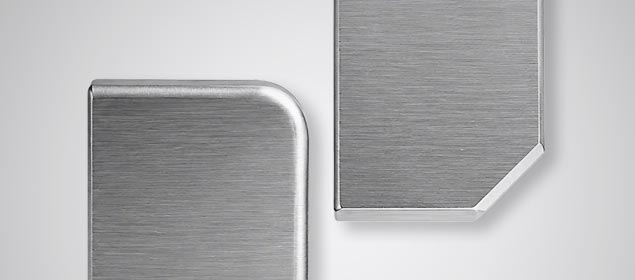
The chamfer is a flat, inclined surface that eliminates sharp edges and facilitates couplings. The radius (or fitting), on the other hand, creates a curved transition between two surfaces and can help reduce the concentration of stresses.
It is also important to distinguish simple deburring from making a bevel or a spoke with defined dimensions: these are different interventions that can affect the dimensional and functional characteristics of the component.
The required geometry must also be evaluated in relation to its producibility.
A very small internal radius, a hard-to-reach area, or a particularly restrictive tolerance may require specific checks on tools and machining methods.
At Guerrini Lauro, we offer our experience to customers: we analyze the technical drawings provided and report any critical issues before the start of processing.
Do you have a piece to make? Contact us for a technical discussion and a quote.
Bevels and radii in CNC turning
In the production of turned parts, even seemingly secondary details such as bevels and spokes can affect the functional characteristics of the component and machining management. It is not just about defining the shape of the edges: these geometries can facilitate couplings, contribute to stress distribution, and affect production feasibility.
For this reason, it is important that they are correctly indicated in the technical drawing and also evaluated in relation to the machining process, to avoid ambiguities and different interpretations.
Bevel and radius: differences and functions in CNC turning
The choice between bevel and radius depends on the function of the part, dimensional requirements, and the characteristics of the workmanship. A bevel cannot always replace a radius, or vice versa.The chamfer is a flat, inclined surface that eliminates sharp edges and facilitates couplings. The radius (or fitting), on the other hand, creates a curved transition between two surfaces and can help reduce the concentration of stresses.
| Feature | Bevel | Radius (fitting) |
| Main function | Eliminates sharp edges and makes mating easier | Create a smooth transition between surfaces |
| Mechanical behavior | Reduces sharp edge discontinuity | It can reduce stress concentration |
| Indication on the drawing | Dimension and angle, or C notation E.g. 1×45° |
Radius value, indicated by R E.g. R1 o R2 |
| Production aspects | Generally simple to make, depending on the geometry | May require specific checks on tools and accessibility |
Why it is important to correctly indicate chamfers and radii in the technical drawing
Bevels without dimensions, unspecified radii, or generic instructions like "remove all sharp edges" may leave room for different interpretations. For example, a chamfer indicated without dimension or angle may not precisely define the required geometry.It is also important to distinguish simple deburring from making a bevel or a spoke with defined dimensions: these are different interventions that can affect the dimensional and functional characteristics of the component.
The required geometry must also be evaluated in relation to its producibility.
A very small internal radius, a hard-to-reach area, or a particularly restrictive tolerance may require specific checks on tools and machining methods.
The value of comparison with the turning shop before processing
The lathe shop's experience can help identify any critical issues already during the design analysis phase: poorly defined geometries, restrictive tolerances, or details that require feasibility verification. Preliminary comparison allows for requests for clarifications and sharing possible alternative solutions before starting production, always respecting the specifications and subject to customer approval.At Guerrini Lauro, we offer our experience to customers: we analyze the technical drawings provided and report any critical issues before the start of processing.
Do you have a piece to make? Contact us for a technical discussion and a quote.
GUERRINI LAURO S.R.L.
Via Umberto I°, 65
Calcio - Bergamo - Italy
Tel. +39 0363 969646
VAT Number 03675810166
Paid-up share capital € 12.000,00
Privacy policy | Cookie policy

Via Umberto I°, 65
Calcio - Bergamo - Italy
Tel. +39 0363 969646
VAT Number 03675810166
Paid-up share capital € 12.000,00
Privacy policy | Cookie policy
 Design by It's Web Agency Brescia